Bird Calls
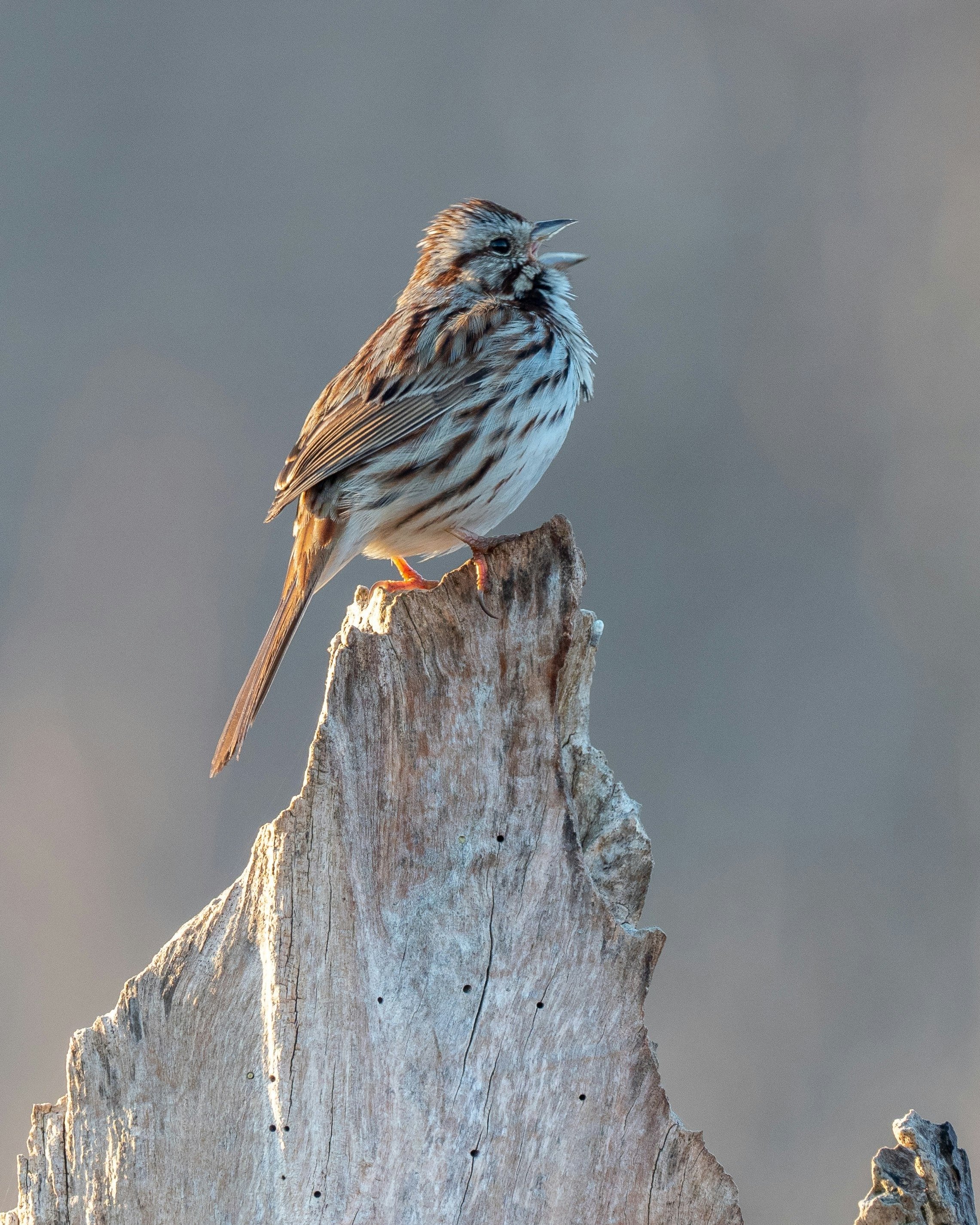
Photo by Patrice Bouchard on Unsplash
February 26, 2024
A memory from backpacking on the Appalachian Trail in Virginia, June 2019: I spent a night at an organic farm/hiker hostel, in a tiny cabin that I had all to myself. Early in the morning I meditated, sitting in a comfortable chair next to an open window. I enjoyed the silence without really noticing it until, just as the closing bell rang from my phone app, I heard the first birds begin to sing. Such a sweet moment, a blessing.
Birds are among the vast range of things of the natural world that I know next to nothing about. Actually, there isn’t much in the natural world that I know at all. But at least I know that birds sing and call, delightfully.
One of my projects this year is to become more aware of my five senses, and this month I’m learning to appreciate the world through hearing. I got some help toward this in a moment of apparent synchronicity, a nudge toward something quite ordinary, but unusual for me.
For about ten years before the pandemic lockdown began in March 2020, I regularly took yoga classes at a nearby studio. I continued taking classes online for a while, then gradually dropped off as I grew tired of yoga in isolation and my exercise focus shifted to barre classes. In the past two years I’ve taken only a handful of yoga classes.
Then a couple of weeks ago a weird curiosity prompted me to check the yoga studio’s website. On the schedule for Presidents’ Day weekend was a two-part workshop, offering a little yoga and a lot about bird watching. For two hours on Sunday afternoon, participants would learn the basics of birding: choosing and using binoculars, field guides, and apps; birding ethics; and how to spot and identify bird species. All this followed by a little yoga. Then, at 8:30 Monday morning, we would meet at Rock Creek Park in Washington, DC, for a two-hour bird walk. I signed up.
The leader was Maria, a yoga teacher from whom I’d taken a couple of classes. An enthusiastic birder, she brings to her classes a “bird of the week,” sharing photos and facts about a particular species. Around 20 of us gathered in the yoga studio on Sunday for the workshop. Maria provided color printouts of PowerPoint slides for “Introduction to Birdwatching,” prepared in conjunction with the DC Audubon Society.
Maria loves birds and loves to talk about them. Some teachers keep up a constant stream of talk, and something I’ve come to know about myself is that listening to a lot of talk is not my ideal learning environment. Excessive repetition annoys me; I want all the words to count. Repetition often seems to be done for the sake of keeping the talk going, but I would rather have a moment of silence before the next new bit of wisdom.
Maria talked for two hours, minus a ten-minute break, explaining each bullet point in elaborate detail, while passing around laminated photographs from her thick binder. All excellent, and I learned a few things, such as the fact that crows are very smart.
But it was just too much. I grew tired of sitting on the yoga mat, switching position from cross-legged to legs straight out in front, and back again. The session was supposed to end with a short yoga practice but, in the last quarter-hour with several more slides to talk through, it looked like this was going into overtime, and I was not willing to comply. At the top of the hour, I gathered my yoga props and put them away, then on my way out quietly and enthusiastically thanked Maria.
After putting on shoes, coat, and other cold-weather gear, I walked past the studio door and saw yogis resting in child’s pose. I thought that perhaps my departure had given Maria a cue to start wrapping up.
The next morning I arrived at the meeting place a few minutes early, intending to pay attention to the route we walked. Rock Creek Park is 1,754 acres with many paths going in all directions. I wanted to make sure I knew the way back to the parking lot. There were around 30 folks in our group, with some kids and friends added to the previous day’s workshop participants.
We were quiet starting out, perhaps remembering what Maria had told us about respecting the birds’ environment and not making a lot of noise. I heard lovely bird calls, though I couldn’t see the birds. Soon Maria started talking, no surprise—she especially enjoys sharing amusing anecdotes of bird behavior—and then conversations began and quickly grew in number and volume. Nowhere near enough to disturb the birds, but enough that I could no longer hear them and the thing became for me just a slow walk with lots of stops, and more talk, no longer fun.
Except for one stop, where I could hear a sweet, shrill song, at which Maria exclaimed, “That’s a Carolina wren,” several times, adding between repetitions the information that this bird is extremely loud for its tiny size. So confirms The Cornell Lab’s “All About Birds.”
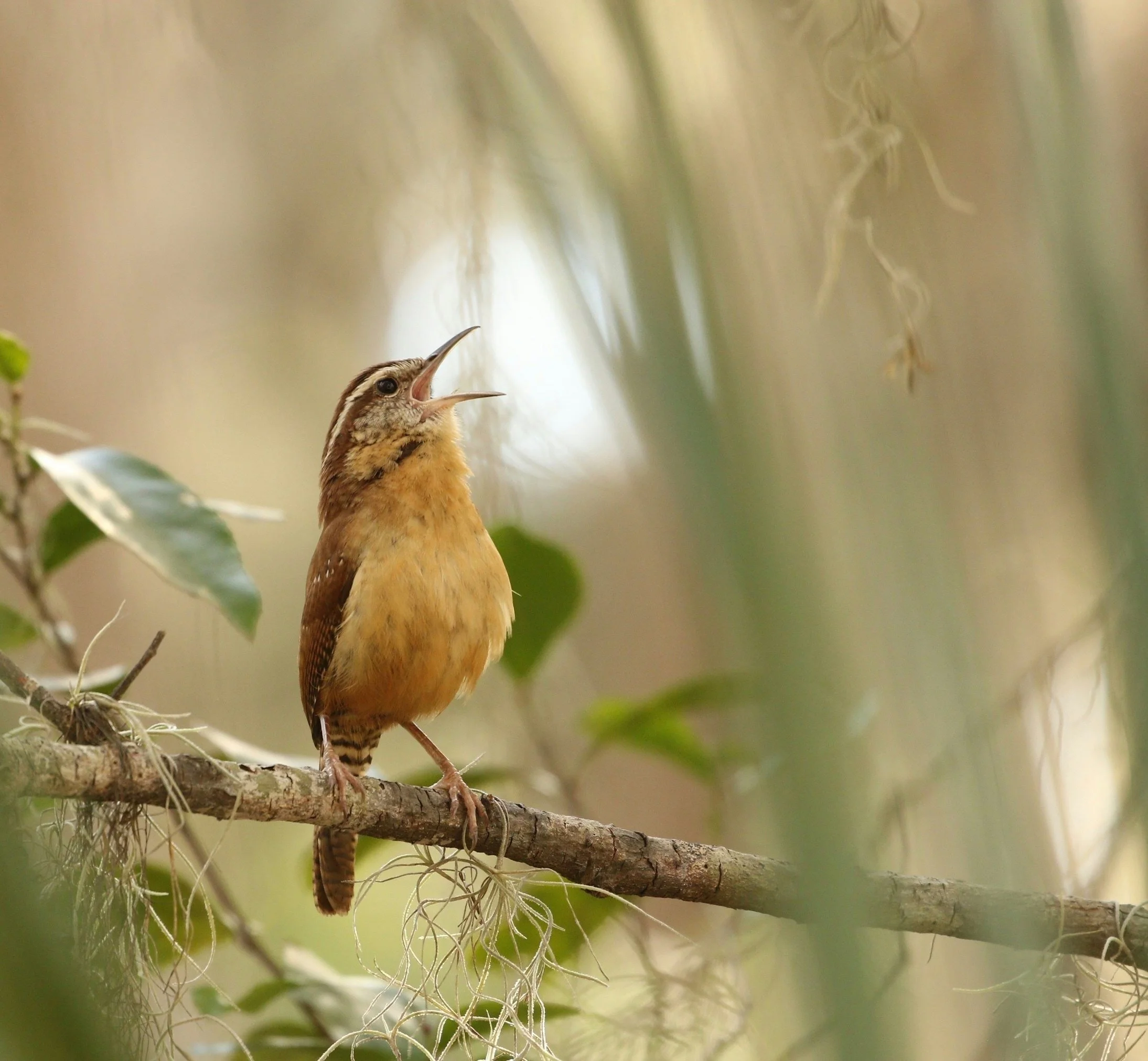
“In summer it can seem that every patch of woods in the eastern United States rings with the rolling song of the Carolina Wren. This shy bird can be hard to see, but it delivers an amazing number of decibels for its size. Follow its teakettle-teakettle! and other piercing exclamations through backyard or forest, and you may be rewarded with glimpses of this bird’s rich cinnamon plumage, white eyebrow stripe, and long, upward-cocked tail. This hardy bird has been wintering farther and farther north in recent decades.”
When we stopped again, at a spot where it was necessary to choose a trail in one direction or another, I stood at the back of the group. As the others finally started walking again, I turned around and headed toward the parking lot. I doubt whether anyone noticed my departure.
Then I enjoyed my own walk at a decent pace, listening for birds and hearing a few, even seeing the occasional bird flying high overhead. I breathed deeply amid the supportive structure of bare-branched trees surrounding me. I felt the grace of following my own guidance.
There were many years when I would go along with the program, often because I had to in order to fulfill requirements of a school or a job. But just as often I went along in the unexamined belief that I had no choice but to follow some leader or fit in with a group. I’m grateful to have outgrown that phase.
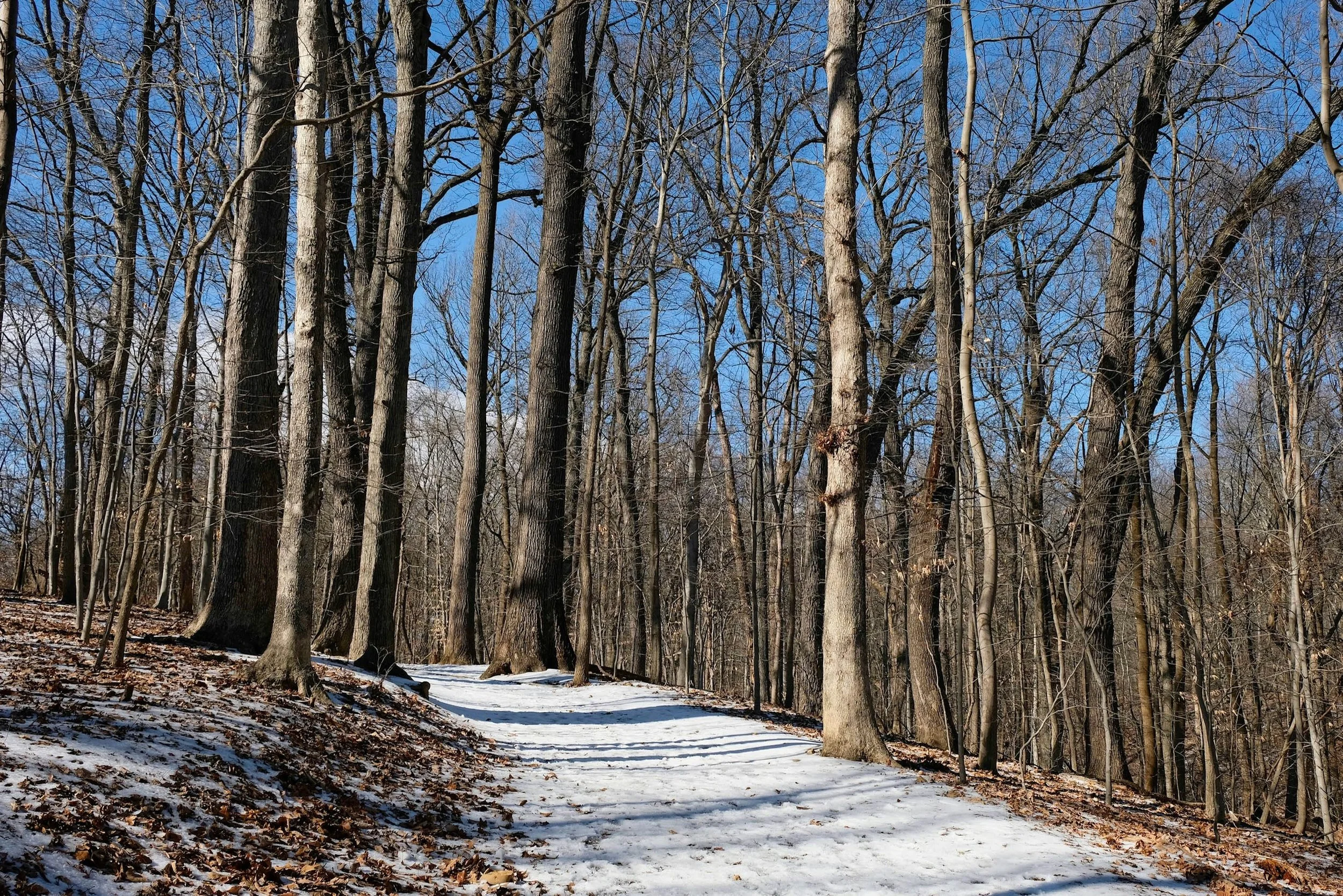
Rock Creek Park in winter. Photo by Sara Cottle on Unsplash
I want to be in these woods more than just occasionally. I want to return at least weekly, to take sustenance in nature, yes, but also to watch the seasonal changes, the greening of trees and shrubs, the appearance of wildflowers, how the light changes. I want to hear and see the birds that come and go. (And now I have the Audubon Society’s pro tips for using binoculars!)
I also want to learn something about this park and other wooded areas where I’ll be spending more time as the weather warms. I hike occasionally with a friend who can identify and name every type of mushroom, and there are many in this region. I don’t have that much ambition, but I would like to know a few of the native trees and shrubs by name and be able to spot a red-tailed hawk and note the different owl species that populate my neighborhood.
For a start, tomorrow I’ll go to the nearest branch of my county library, where, according to the online catalogue, I’ll find on the shelves a history of Rock Creek Park and another book with the intriguing title A Year in Rock Creek Park: The Wild, Wooded Heart of Washington, DC.
Might as well start where I am.