Seasons of Love
Photo by Austin Chan on Unsplash
September 13, 2024
In daylights, in sunsets
In midnights, in cups of coffee
In inches, in miles
In laughter, in strife
In five hundred twenty-five thousand, six hundred minutes
How do you measure a year in the life?
How about love?
How about love?
How about love?
Measure in love
Seasons of love
Seasons of love

— From "Seasons of Love," by Jonathan D. Larson,  © TuneCore Inc., Universal Music Publishing Group
It’s the season of Recommitment at my church.*
Last week I wrote about the season of Virgo, the last sign of summer as it turns into fall in the Northern Hemisphere. In spiritual practice, this is a time for discernment—for observing, perceiving, distinguishing, and maybe discarding.
I’ve been noticing the synchronicities among various spiritual traditions.
From my own Nordic and Celtic ancestry, this is the time of Hausblót, the Norse fall equinox feast, which corresponds with Mabon, the Celtic harvest festival.
“Mabon, also known as the Autumn Equinox, is a time to honour the bountiful harvest, express gratitude for the abundance of the Earth, and find balance within ourselves.
Mabon provides an opportunity to deepen our connection with nature and embrace the changing seasons. Take a walk in the woods and witness the transformation of the leaves, from vibrant greens to fiery reds and golden yellows. Gather fallen leaves, acorns, or pine cones to create beautiful and meaningful decorations for your home or altar. Engaging in activities like gardening, foraging for wild mushrooms, or participating in a local harvest festival can further immerse you in the spirit of Mabon.”
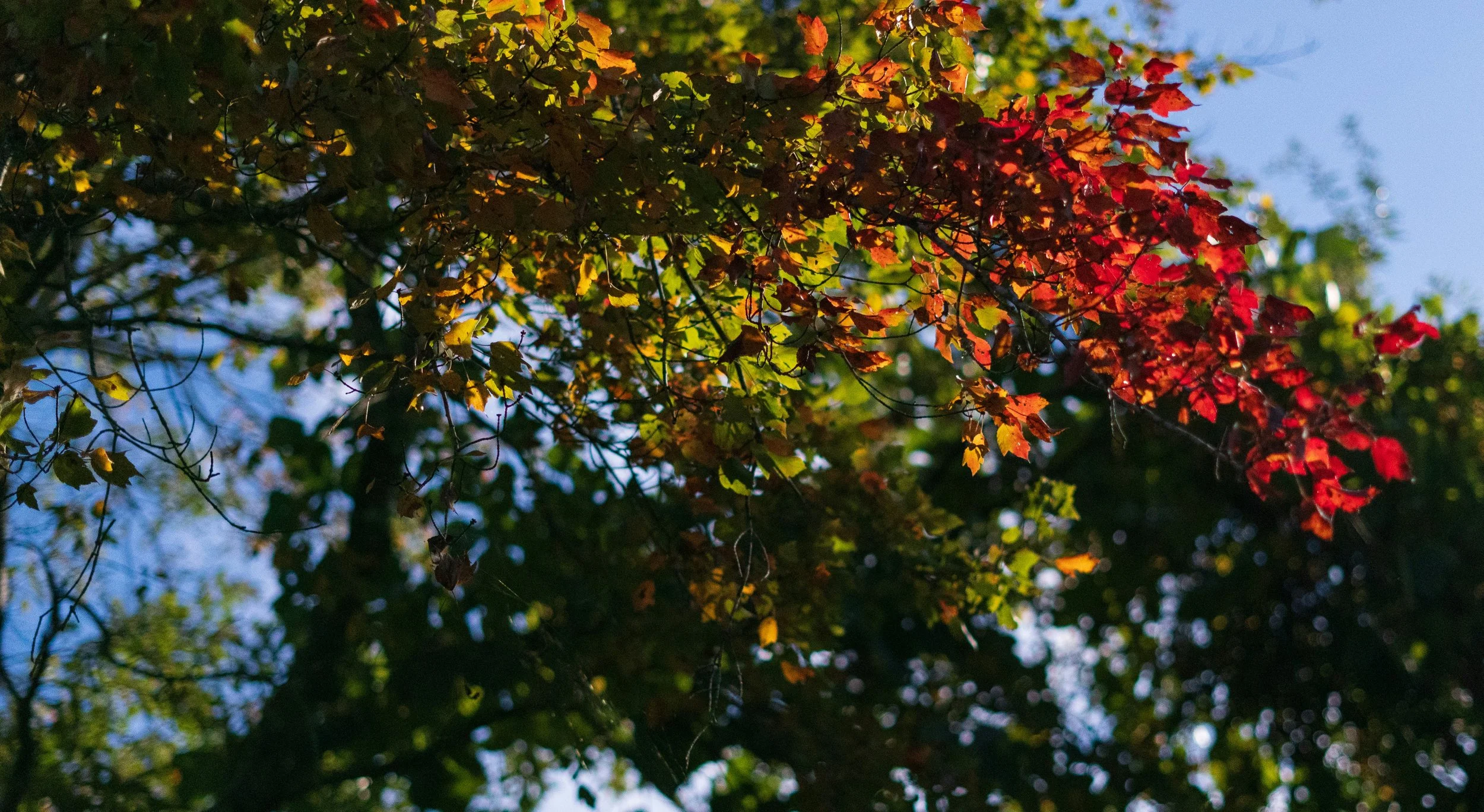
Photo by Adaobi B on Unsplash
Many Christians worldwide are observing the Season of Creation, which began September 1st and continues through the Feast of St. Francis of Assisi, on October 4th. This relatively new observance (started by the Orthodox church in 1989, later extended by the World Council of Churches) is a time to reflect on our relationship with the environment and how our lifestyles and choices, both personal and societal, can contribute to solutions instead of keeping us stuck in being part of the problem.
But shouldn’t we be doing this reflecting—and taking action—all the time? It’s like Black History Month, Women’s History Month, National Native American Heritage Month, etc. On the one hand, these 30-day observances serve to draw attention to groups that most of the time are barely visible to many. On the other hand, this trend further entrenches and normalizes the segmentation and marginalization of much of the population, which is why we don’t have White Men’s History Month.
Enough digression; let’s return to seasons. The new moon on Sept. 2 also brought the Jewish month of Elul, which leads to Rosh Hashanah. Elul is a time to examine your conscience and prepare for the High Holy Days between Rosh Hashanah and Yom Kippur. As Rabbi Danya Ruttenberg says, “It's a time to traditionally do a deep accounting of the soul, to understand who we are and to work to make repairs that must be made.”
Discerning, accounting, making repairs.
Human cultures have many ways of measuring time and seasons. The Islamic Hijri calendar is a lunar calendar based solely on the cycles of the moon’s phases. The Hijri year consists of twelve months totaling 354 or 355 days, which is why the named months do not remain in the same seasons but retrogress through the solar year about every 33 years. Four of the months are considered sacred. The present month is Rabi’ al-Awwal 1446 in Arab countries and other parts of the world.
According to Hamariweb, “Although Rabi' al-Awwal is not one of the sacred months, it holds a special place in the hearts of Muslims as a time to reflect on their faith, seek spiritual growth, and deepen their connection with the Prophet Muhammad.”
Discerning, seeking, deepening connections.
Pluto is in Capricorn for a brief time, only from September 1st to November 19th this year. Then the planet will be in Aquarius until 2048. My horoscope for today on the Chani astrology app tells me that, over the past 15 years, I’ve undergone a total metamorphosis. I’m guessing that’s because Pluto moved into Capricorn, my rising sign, in 2008 and remained there until March 2023. Following the advice of Jeanna Kadlec “to use astrology to reach for a more holistic understanding” of myself and my own natural rhythms, I had to ask, what’s happened in my life over the past 15 years?
The fall of 2009 was the start of my JustFaith year. I had retired from nearly ten years as a volunteer Sunday School teacher with the interfaith community in which we brought up our kids. Fall 2009 through spring 2010 for me was a time of sorting, sifting, and discerning, as I spent that year consciously choosing between two congregations—one, a large, multiracial Roman Catholic parish with a fantastic multicultural music ministry and masses in three languages; the other, a small (50-60 average Sunday attendance), progressive, independent Christian congregation.
* At the spring equinox 2010, I decided to commit to Seekers Church, the small one, which is now entering its annual season of Recommitment. This is a tradition that dates to the founding of Seekers’ mother church, the Church of the Saviour, in 1947.
“A key element in the life of Seekers Church is the understanding that our commitment to Christ and to Seekers Church is conscious and intentional. To reinforce this understanding, we renew our commitment to the community each year. “Recommitment Sunday” is observed on the third Sunday in October in memory of the first commitment of the founding members of the Church of the Saviour in 1947.”
In other words, each year the church members individually choose to commit to another year of membership, or not. We make the same discernment and choice for any mission groups we belong to within the church community. There is no pressure, no judgment, no loss of friendship or good will as a result of our decisions.
Nowadays there’s nothing radical about time-limited commitment. Attaching to a group, a relationship, an idea for a while, then moving on to something different, is the societal norm. But in midcentury America, at least in the conservative White areas, a commitment was considered permanent until you took action to change it. When I was 8 years old my family left one Southern Baptist congregation for another one closer to our home, a move that required a formal transfer of membership.
Through this Recommitment season, I’ll be doing the work of sorting, sifting, distilling what is alive and generative in my life and letting go of what no longer serves. This work is not easy, and it’s best done with gentleness, patience, and gratitude for the abundant harvest.
Courtney Carver, who writes a lot about simplifying and letting go, quotes Elizabeth Gilbert:
“You have to stop doing things you want to do so you can do the thing you most want to do.”
Among the many methods for examining one’s life is this one, from Steve Lawson.
“The lowest-hanging fruit for positive change often comes through asking the honest “do you really?” questions. When we question the habituated patterns in our life, we create space for more important things (sometimes life itself) to occur. There are many things in life we come to accept as normal, even though they may not be serving us. Here’s a list of some “do you really?” questions around technology to help get you started in the practice. 1. Do you need your work email, or any email, on your smartphone? Really? 2. Do you need notifications on for x app or messaging? Really? 3. Do you need to stay subscribed to all those email lists and newsletters? Really? 4. Do you need to stay up to date on what x, y or z person is doing on social media? Really?”
I leave you with a poem:
The weeks stood still in summer.
The trees’ blood rose. Now you feel
it wants to sink back
into the source of everything. You thought
you could trust that power
when you plucked the fruit:
now it becomes a riddle again
and you again a stranger.

Summer was like your house: you know
where each thing stood.
Now you must go out into your heart
as onto a vast plain. Now
the immense loneliness begins.

— From "Onto a Vast Plain," by Rainer Maria Rilke, translated by Joanna Macy and Anita Barrows