When the Veil Thins
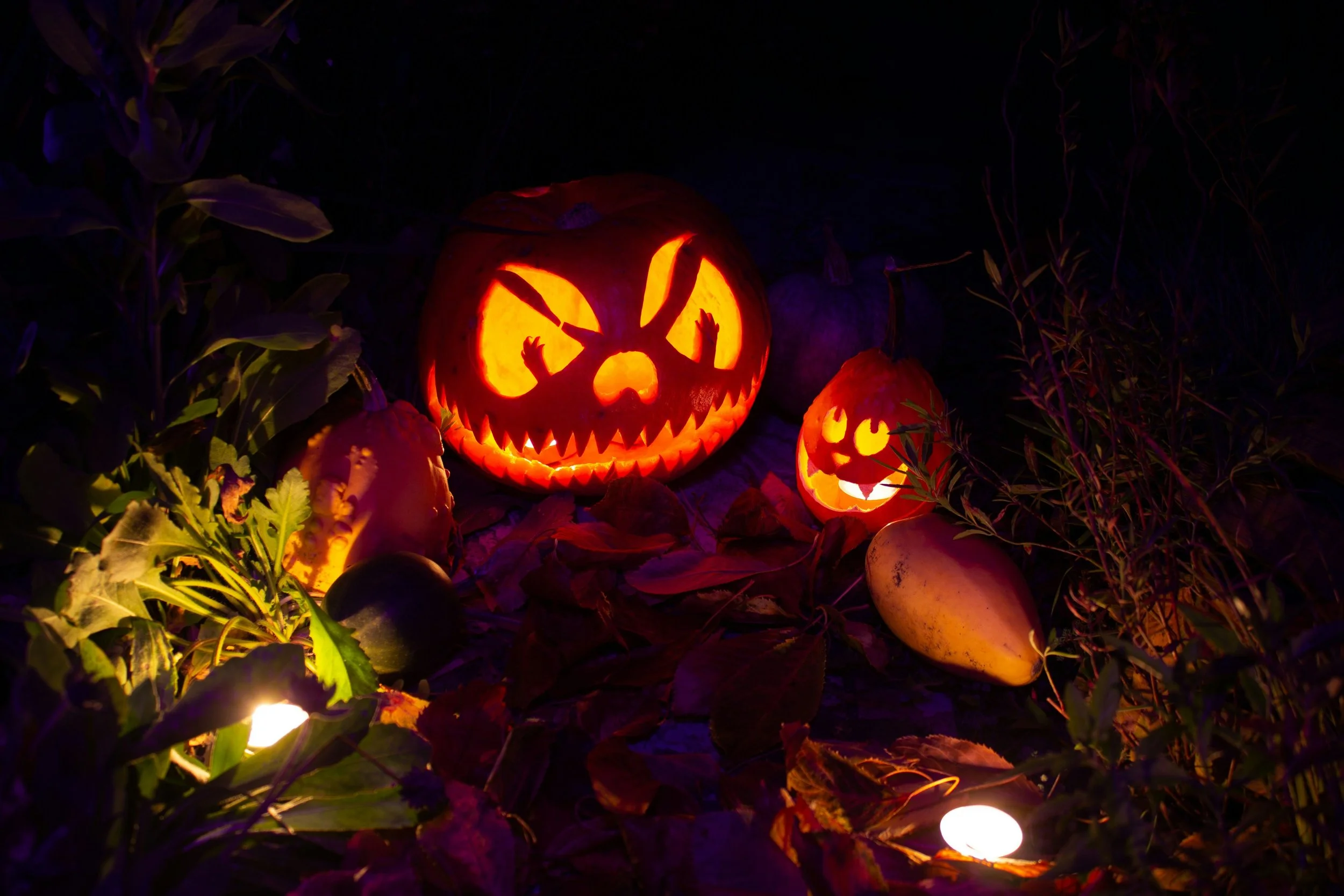
Photo by aisvri on Unsplash
October 31, 2024
I’m joining the chorus celebrating tonight the ancient Celtic fire festival of “summer’s end”—you can hear the contraction of that phrase in the pronunciation of Samhain (sah-win). In the Northern Hemisphere, Samhain marks the New Year and the transition into the dark half of the year, with all its potential deprivation and danger. Tonight, the veil between the living and the dead is gossamer-thin and in flux, so the spirits of the Otherworld and souls of the dead can come and move among us.
Historically, people were worried that they would encounter ornery spirits if they ventured outside on Samhain night, so they dressed as ghosts or wore masks to disguise themselves. Folks would leave treats on their front porch or place an extra setting at the table to welcome any friendly spirits who stopped by. You can see how these Samhain rituals easily morphed into our modern-day version of trick-or-treating in costume.
Nighttime bonfires were another of the long-standing Samhain rituals - this one was thought to help combat the impending darkness of winter and the fearful chill that accompanied the idea of roaming spirits. Because the veil between living and dead is believed to be the thinnest on this night, Samhain is also a powerful night for divination and spellcasting by candlelight. — Hawthorn & Honey
Hawthorn & Honey is an intuitive herbalism school in Tacoma, Washington. At their website you can find earth-centered rituals and recipes for observing this final harvest festival, halfway between autumn equinox and winter solstice.
But it was close to the festival of Beltane, on the opposite side of the year, that Pope Boniface IV in 609 designated May 13 as All Saints Day, to honor Christian martyrs and saints. In the mid-eighth century, Pope Gregory III moved this feast day to November 1, thus beginning the church’s capitalization on Samwain traditions.
The offerings of food and goods to protect themselves from spirits and ancestral ghosts became offerings of food and drink to the poor, displays of generosity and goodwill. And the tricks and pranks attributed to otherworldly and evil spirits manifested themselves in the spirit of the saints.
Eventually, All-hallows’ Eve evolved into Halloween, becoming more popular in secular culture than All Saints’ Day. The pagan-turned-Christian practices of dressing up in costume, playing pranks and handing out offerings have evolved into popular traditions even for those who may not believe in otherworldly spirits or saints. However, whether Halloween celebrants know it or not, they’re following the legacy of the ancient Celts who, with the festival of Samhain, celebrated the inevitability of death and rebirth. — Cady Lang, TIME, 10/30/18
I have Celtic ancestry in my mother’s family, but I’m more interested in my father’s Nordic ancestry, in Norway and Sweden, possibly because I know so little about it. My mother’s family has been well researched, books published of family trees and stories. On my father’s side, family history was more of an oral tradition; thus, most of the details are known only to the spirits and we are left to interpret their lives and times as best we can.
Interestingly enough, the Vikings of the 8th - 11th centuries also had an annual (end of Autumn) nocturnal festival ...strikingly similar to Samhain, where they too venerated the spirits of the dead and offered sacrifices to avoid malevolent forces. This ancient Norse tradition was known as 'The Alfablot' (Old Norse: Álfablót), literally meaning “Sacrifice to the Elves.” — Sons of Vikings
Elves for the Vikings were not like Santa’s little shop workers or the pointy-eared people of modern fantasy. They were spirit beings, demi-gods who animated and influenced the natural world and who could possibly take on human form.
Norse lore and belief held the world was teeming with a diverse array of beings existing on a broad spectrum from spirit to flesh rather than an order limited by species or rules. — Sons of Vikings
The Álfablót was the time to honor the elves and to appease them with offerings in order to gain prosperity and ward off bad luck in the coming year.
As I write this, I’ve been scanning my emails and newsletters for inspiration and research on this holiday. But the subject lines that grab my attention are the ones about next week—the election and all the anxiety and turmoil around it. I can’t contribute much to the discussion of either of these topics, yet I am called to engage with the election because I’m a citizen and with Samhain because I have ancestors and someday I will be an ancestor.
A couple of weeks ago, rowan wrote about the twofold situation we’re in.
… i feel our ancestors calling us toward justice work. ancestor work is especially important for white folks in settler diaspora in america; other cultures have deep ancestral connection still, ongoing nourishment and support for their work and life and love, and for many white folks of euro american descent, we don’t have this. we have ancestor work but no political work. or we have political work but no ancestral connection. and in these times, we need them both.
this is how i feel into samhain season. i feel into connection with my ancestors, and the real longing for freedom in my lineages as well as the places in which they were/are complicit in stealing the freedom of others. this liminal time is a both/and, just like our work is.
i do deeply believe that at the heart, our ancestors want justice. want freedom. want liberation. and so do i. and i think, if you are reading this, so do you.
At Worts & Cunning, Alexis J. Cunningfork writes,
I think we all need to become conscious of our roots in ways that have been previously lost due to assimilation, colonization, and the survival skill of forgetfulness that is so keenly humxn. But hopefulness and the important knowing the one is always in a web of interconnectedness comes about when we take time to re-acquaint ourselves with the seasons of the year, of our lives, and our revolutions.” — A Might-do List for Lughnasadh
I have few specific memories of Halloween in 1960s Phoenix. I went out trick-or-treating and collecting candy, and sometime during those years the razor-in-the-apple scare happened, after which we no longer received apples in our bags. An early indicator of dangers to come.
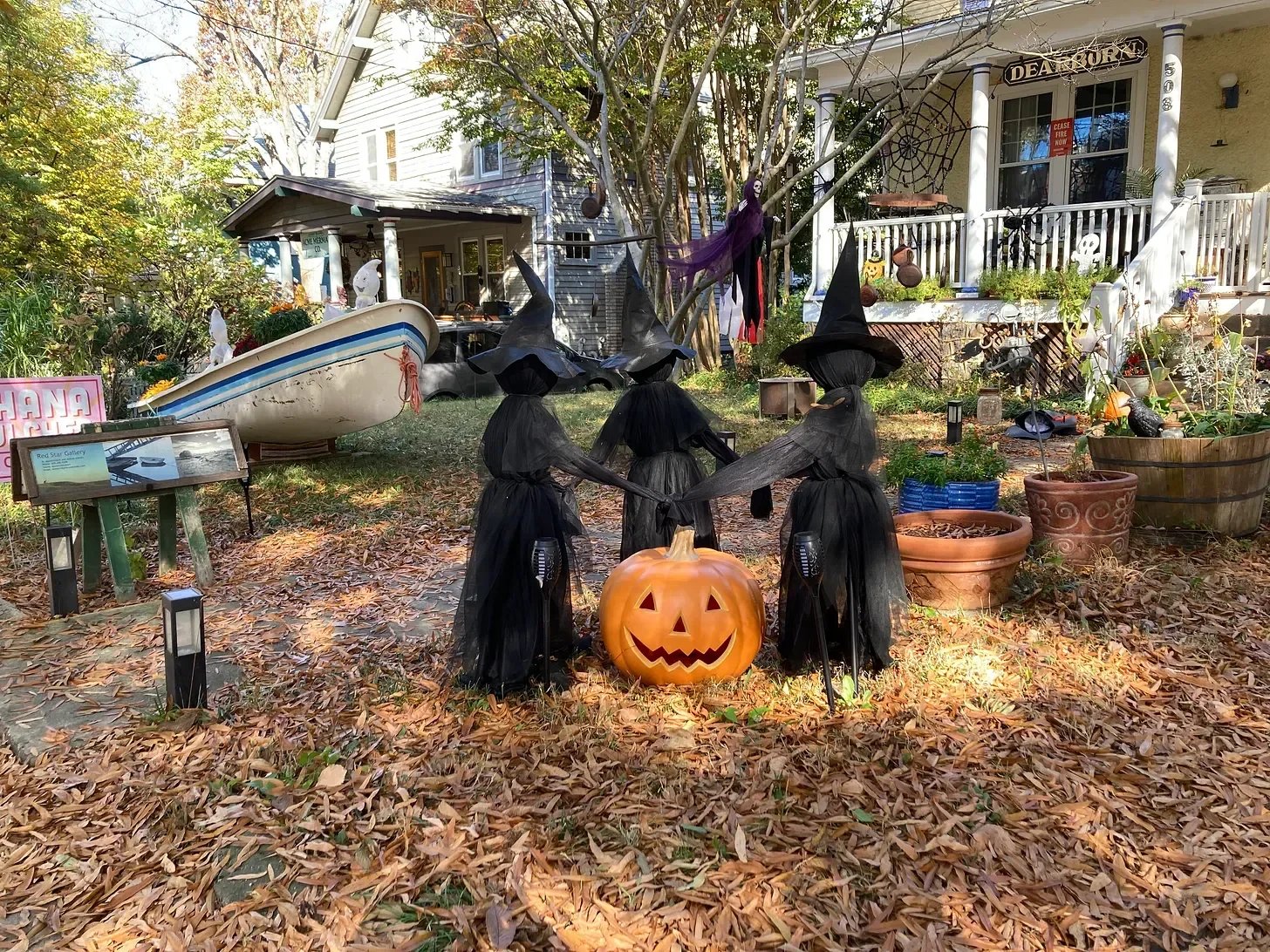
Our family’s digital photo collection begins in 2003, when our kids were no longer tiny, but we have plenty of photos of them and their cohorts in costume because they were theatre actors from age 8 on. And what is the fun of Halloween about, if not playing roles and assuming other identities? The kids performed Shakespeare, so we often cavorted with spirits.
This morning Frances Ray posted a magical compendium of historical witches including Hecate, of Greek mythology. She makes an appearance in the famous witches’ scene in Macbeth, entering the stage as the Three Witches finish their chants. Hecate says,
O well done! I commend your pains;
And every one shall share i' the gains;
And now about the cauldron sing,
Live elves and fairies in a ring,
Enchanting all that you put in.
May it be so.