A Decade Examined - Part 7
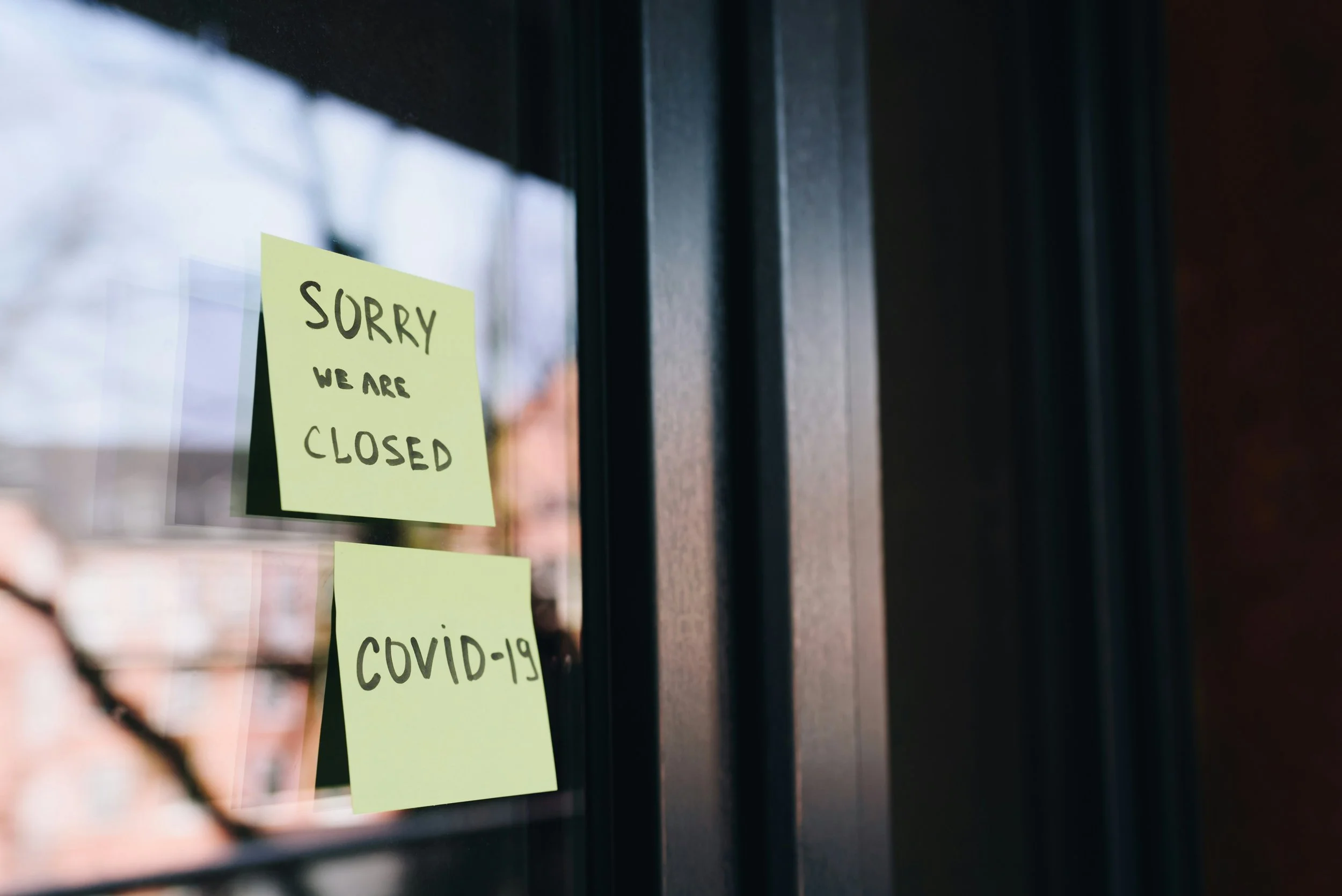
Photo by Anastasiia Chepinska on Unsplash
February 7, 2025
The next year of this series of reflections begins in the spring of 2020, and we might as well give it the start date of March 11, the day the World Health Organization, having declared COVID-19 a global health emergency on Jan. 30, announced that the outbreak had become a pandemic.
On that day I drove my brother David to a hospital emergency department, from which he was admitted to the psychiatric unit for Electroconvulsive Therapy (ECT) to treat his major depression episode of bipolar disorder. The hospital admission was the end of a long and harrowing process involving much work and even more luck. I believed then, and still believe, that had this process taken one day longer David would not have been admitted.
Impressions of those early days of the pandemic: Of course there was the atmosphere of fear, confusion, and wondering what would happen next and what to do. People started sewing masks before they became available in quantity on Amazon. Signs appeared six feet apart on the floors of medical offices and building lobbies, reminders to keep your distance from the next person.
At first, many assumed this situation would last only a few weeks. I remember thinking, “How can so many businesses just shut down? How will people survive?” Soon I read an epidemiologist’s prediction that the pandemic would continue for two to three years, and I realized it probably was correct.
I turned 65 about two weeks after March 11. My retirement from my job was planned for the end of the school year, but life changed suddenly for me, as it did for everyone else. My last day in the office was Tuesday, March 10. In my volunteer work, I taught my last ESL class that evening. My church congregation met as usual in our storefront sanctuary the Sunday before March 11; the next Sunday we were on Zoom.
The pandemic impacted me mainly through its impact on others. I did not know anyone personally who died from COVID-19, and I know of only one near relative who became seriously ill. I’m lucky that my children were grown. (They are even luckier.) I can’t imagine what it was like for all the parents who suddenly were homeschooling their kids and/or caring for babies and preschoolers while working full-time jobs at home.
All the events and meetings I regularly attended stopped. However, unlike most of my peers, I didn’t get to stay at home. I still went out a lot for my work, which was mainly David.
I’ve written about my older brother before, most recently in Part 2 of this series, which covered my year 2015. At that time he was living in an apartment paid in part by his small Supplemental Security Income (SSI), the Social Security benefit provided to people with disabilities and older adults who have little or no income or resources. The remainder of his rent was subsidized by Cornerstone Montgomery, a county nonprofit organization, which also provides outpatient mental health care and, for clients in their housing program, on-site counseling and medication supervision.
I’m reviewing this part of 2015 because the mental breakdown David experienced that spring and summer happened again, with similar symptoms, at the end of 2019. In both episodes, he first stopped taking his meds (hiding the pills under his tongue while with the supervisor), and soon after began drinking again.
In 2019 he was living in his second Oxford House, a network of independent group houses where members share responsibilities and “can stay as long as they like, provided they stay drug and alcohol free, are not disruptive, and pay their share of house expenses.” That’s the ideal, anyway. In reality, houses vary in their discipline standards, which is why David was in his second house.
I am far from being a devoted, attentive caregiver to any adult, let alone one with Bipolar I disorder and co-occurring substance abuse. Although I’ve learned many useful lessons in my years of giving my brother the minimum support necessary—or my best guess of that, as it’s always a moving target—I’ve remained mostly clueless in every new development.
David’s housing situation worked, until it didn’t. The self-proclaimed house manager (though Oxford Houses traditionally have a democratic structure) did not call out members on infractions such as not attending AA meetings. If he knew David was drinking, he tolerated it.
In the fall of 2019 I could see that David was going deeper into depression, but I didn’t know what to do. Confronting him was useless. The fact that his treatment was provided by a nonprofit serving impoverished clients meant that the psychiatrists and psychologists varied in their levels of skill and dedication. Actually, that’s probably also true with those who get paid more.
One cold December evening, David left his house and, sometime later, was found lying on the ground. An ambulance was called. The next day, David called me from the hospital. He was discharged after just a few days, the time it took to bring his fluids and electrolytes to normal levels.
Then came several weeks of unfolding crises and worries and work until, at the end of January, he was admitted to a psychiatric hospital where he stayed a month undergoing treatment for severe depression. After his discharge he spent two weeks at a Cornerstone Montgomery crisis house. A Cornerstone psychiatrist advocated for David with the head of psychiatry at the upscale suburban Washington, D.C., hospital where he was admitted on March 11.
That morning I picked him up from another hospital, where he had been taken after falling in the crisis house. He wasn’t injured, but in any institutional setting there are rules, one of which is, if you fall, you go to the hospital.
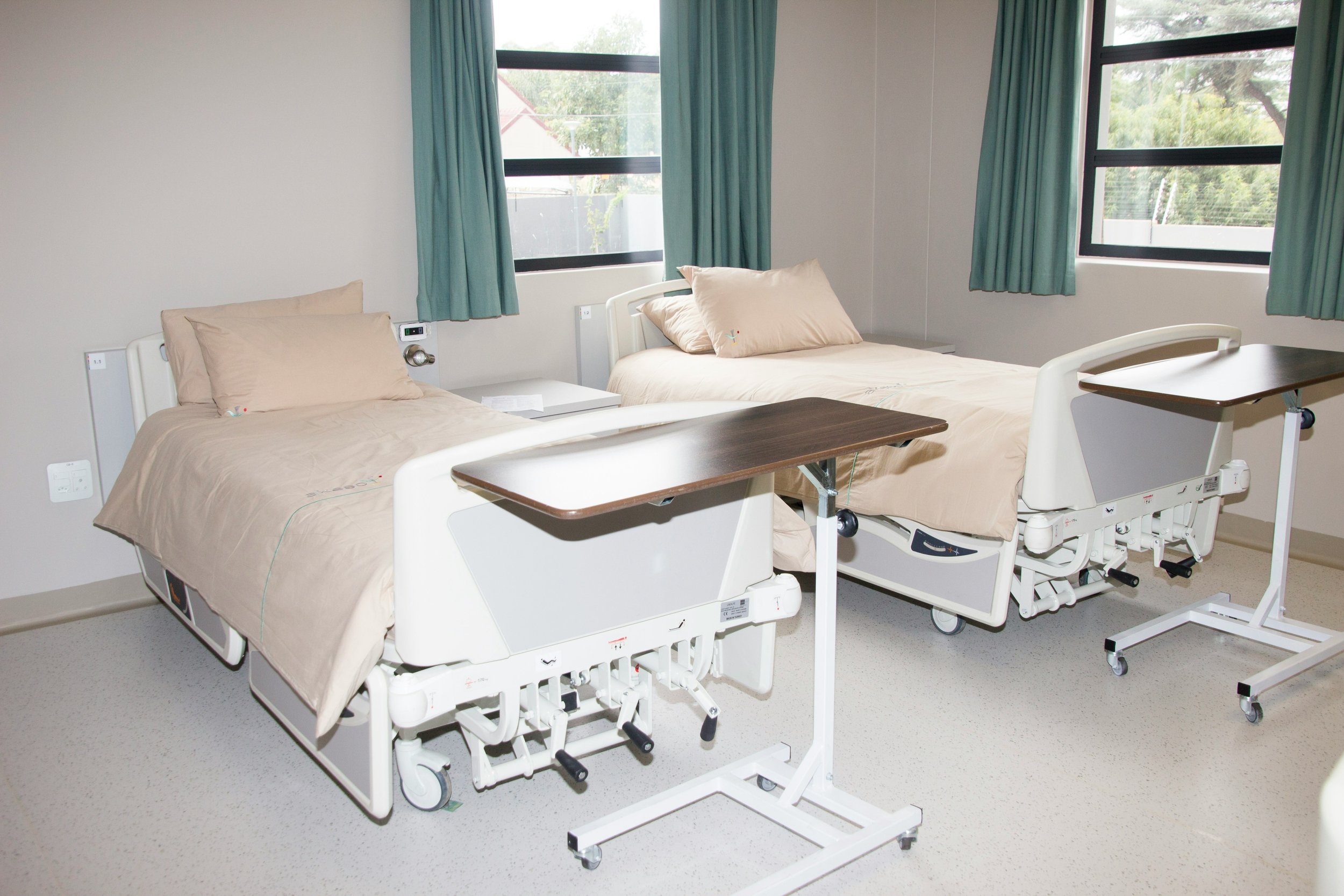
Photo by Hush Naidoo Jade Photography on Unsplash
I arrived mid-morning, only to learn that the discharge order hadn’t been given. I felt a little panicky. Although I’d been told that his admission for ECT had been arranged, because of my experiences with David and hospitals, I didn’t quite entirely believe it. I needed to get David out of the first hospital before that second admission could happen.
Here I pause … not for a commercial break, exactly, but sort of. I have to give a shout-out to Rebecca Scolnick for her recent post Getting Sick as the Empire Falls, subtitled “36 things I learned about US Healthcare from spending 36 days in the hospital.” If you have ever experienced a hospital stay—yours or a loved one’s—or if there’s a chance you might ever experience a US hospital, read this post.
Rebecca’s hospital story is different from mine and David’s in most respects, but I know viscerally her points #1, 2, and 18. I’ll quote #1: “You have to advocate for yourself and you have to do it every moment of every day!”
I actually learned that lesson years ago when my son, at age 13, was seriously injured and required surgery and a week in the hospital. I learned the first day that no one should be left alone in a hospital for a minute if they cannot self-advocate.
Back to David, on the way from Hospital #1 to Hospital #2 on the afternoon of March 11.
I was told that he would be admitted from the emergency department: from, not by—an important distinction. During his 2015 breakdown I had spent a tense day trying to get him admitted by an emergency department, finally succeeding only by luck.
Also relevant is Rebecca Scolnick’s point #9, about “Lack of Communication Between Hospital Teams”: If I’d known, as Scolnick reports, that teams of personnel within a hospital don’t communicate, I wouldn’t have felt quite so frustrated by the lack of information exchange between hospitals. When David finally started receiving intake procedures after waiting more than an hour in a cubicle, the nurse ran the same tests that had been done for his discharge that morning, the results of which I had presented to this emergency department.
Finally, around 6 p.m., I was assured that the admission was secure and that I could go home.
David remained in the hospital until the end of April. This course of ECT was effective in stabilizing him, but only for a few months, whereas the effects of ECT in 2015 had remained for at least two years before declining.
For the rest of 2020 we went through another series of unfolding crises, worry, and work, as his depression returned and I pursued his acceptance into Cornerstone’s housing. That finally took place in September, but lasted only a couple of months before his symptoms, which included near-catatonia, made him unable to live independently. For example, he was not regularly eating or drinking fluids. He would eat if food was given to him, but would not get food for himself even though it was available in his apartment.
Finally, a hospitalization after a fall led to admission to a rehabilitation and long-term care center. In February 2021, after my insistent negotiation with the facility’s director, he was approved for long-term care, paid for by Medicaid.

Photo by Venti Views on Unsplash
Also in 2020:
I started running again. I’d been a runner through my twenties and thirties, then stopped running in my mid-forties because of knee pain.
What I learned: After a year of running again (in my sixties), I still had no knee pain. Some months later, when the knee and hip started objecting, I traded running for long walks and started hiking.
Virtual Concert Band. If you’ve been following my blog for a while, you might know that I play bass clarinet with a community concert band. The bass clarinet is a fairly new addition to my instruments; I’ve played the B-flat soprano clarinet (what people generally mean by “clarinet”) since I was 9, and that’s what I was playing in my band in 2020. Of course, all instrumental and choral ensembles shut down in March, but almost immediately professional musicians began playing in virtual ensembles. Each musician would videotape their performance in their home or studio, and then by audio and video editing all the recordings would be magicked into an ensemble.

Photo by Jens Thekkeveettil on Unsplash
A young music teacher and woodwind specialist in Melbourne, just a couple of years out of university, noticed this and decided that amateur musicians ought to have the same opportunity. Before the end of March 2020, Laura Campbell started the Virtual Concert Band and produced a YouTube video every month for the next two years.
I got in on it after the first couple of months. Here’s how it worked: Once a month, Campbell offered a challenging piece of music, and for $25 you downloaded sheet music for your chosen part plus all the necessary tech support including a recording of a full band performance that you would listen to with a headset while you recorded your part. Each project also included instrumental sectionals on Zoom, sometimes with the composer attending, and a Zoom social meetup. You submitted your recording by the deadline, and a few weeks later you got to find your own little video square while listening to your performance with 200 to 300 other musicians worldwide—among all the projects, representing more than 40 countries and most of the US states.
What I learned: Thanks to Campbell and VCB, I was a better clarinet player when my community band resumed, two years later. Also, though I made my first recording as a fearful newbie, after a year or so of preparing and recording a piece every month it had become routine—I had figured out the two-device setup, purchased a ring light with a stand to hold my phone (the recording device), found the best spot near the desktop (the listening device), and worked on some really difficult music—all of which was also beautiful and fun to play.

Photo by Nick Morrison on Unsplash
I was starting a blog, a process that proceeded by many fits and starts, on three different hosting sites (WordPress, Squarespace, and finally Wix), over many frustrating months. Finally, after I hired a designer who created a beautiful and functional website (a 2023 story), I uploaded previous posts, beginning with this one. (The date is incorrect; it was written in June 2021. I still have errors to fix.)
What I learned: If it’s worth doing it’s worth doing—full stop. Mistakes and do-overs are just part of the process.
Overall, I think I followed Oliver Burkeman’s Seventy Percent Rule, from his newsletter The Imperfectionist, Jan. 30, 2025.
The 70% rule: If you’re roughly 70% happy with a piece of writing you’ve produced, you should publish it. If you’re 70% satisfied with a product you’ve created, launch it. If you’re 70% sure a decision is the right one, implement it. And if you’re 70% confident you’ve got what it takes to do something that might make a positive difference to the increasingly alarming era we seem to inhabit? Go ahead and do that thing. (Please!) — Oliver Burkeman