Word for the Year
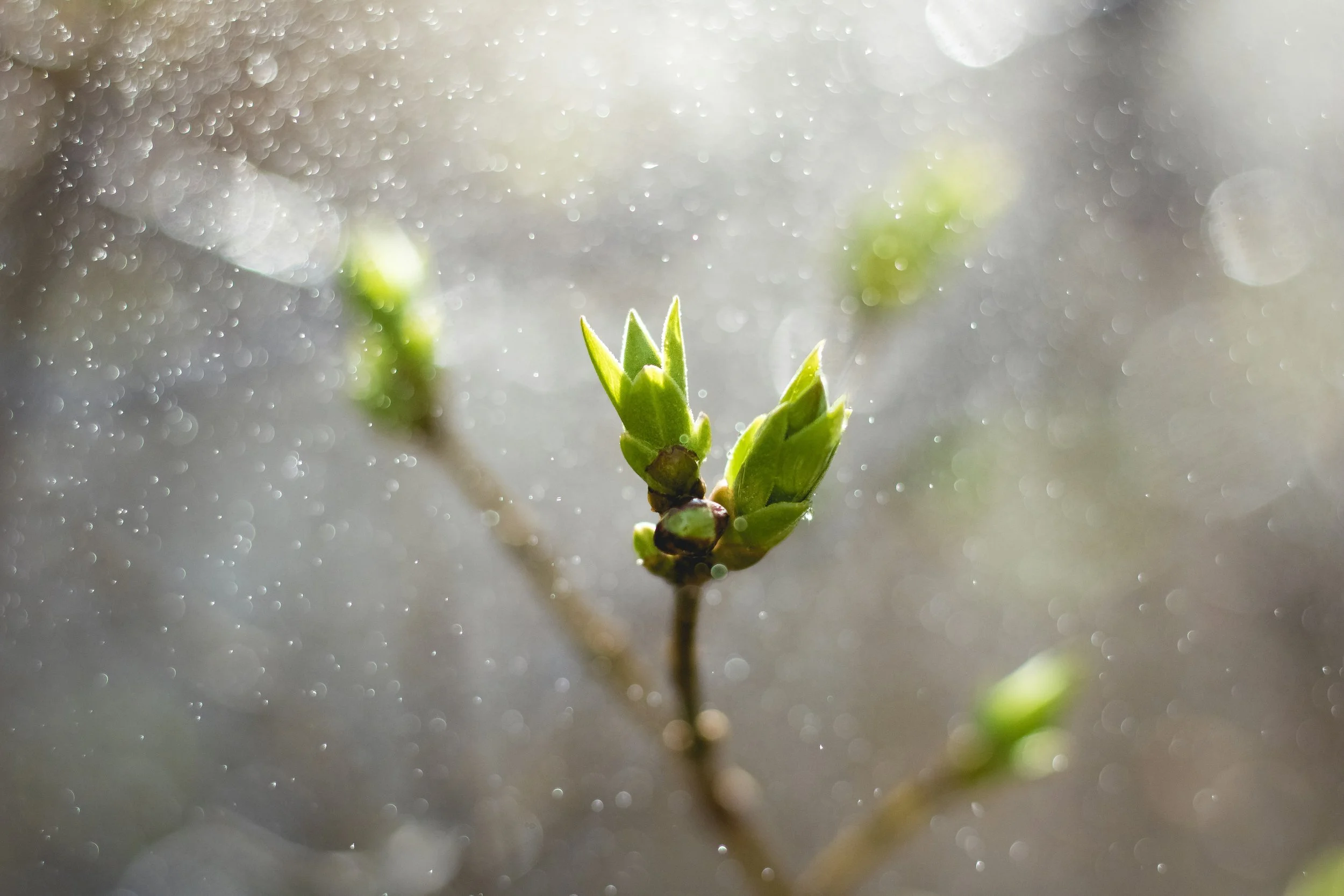
Photo by Jonas Kaiser on Unsplash
January 31, 2025
Dear Friends,
I told you all last week that I’d chosen my Word for the Year and that I would write about it this week. And I told you a little about how I chose my word for last year—not an organized or enlightening process—and how I’d decided nonetheless to accept my word, and maybe myself, as good enough.
In my search for a word for 2025, I found encouragement and helpful guiding questions in a workbook by Nic Antoinette, one of several free resources you can download from this page of her website.
The word that came to me is interdependence. What does it mean, and why did I choose it?
In the online Merriam-Webster Thesaurus, two of the main synonyms for dependence are anchor and reliance. The prefix inter- means between or among. The Free Dictionary expands those common meanings.
1. Between; among: international.
2. In the midst of; within: intertropical.
3. Mutual; mutually: interrelate.
4. Reciprocal; reciprocally: intermingle.
I continue to read about how our communities are our strongest resources for living hopefully into a future that seems chaotic and threatening. Anne Lamott, in an opinion piece for The Washington Post this week, wrote of both the reality and the resilience:
Along with half of America, I have been feeling doomed, exhausted and quiet. A few of us, approximately 75 million people, see the future as a desert of harshness. The new land looks inhospitable. But if we stay alert, we’ll notice that the stark desert is dotted with growing things. In the pitiless heat and scarcity, we also see shrubs and conviction.
Lacking obvious flash and vigor might make it seem as if there is no resistance. But it is everywhere you look.
It is in the witness and courage of the Right Rev. Mariann Budde.It is in the bags of groceries we keep taking to food pantries. It looks like generosity, like compassion. It looks like the profound caring for victims of the fires, and providing refuge for immigrants and resisting the idea that they are dangerous or unwanted, and reaching out to queer nieces, siblings and strangers and helping resist the notion that their identities are unworthy, let alone illegal.
Those are the images I want to keep before me this year as I live and learn about interdependence. I have a lot to learn about how interdependence works in real life, in my life.
Again I’m grateful to Nic Antoinette, for her monthly podcast Rose Thorn Bud, available to paid subscribers to Wild Letters. In the podcast, Nic and her friend Julia Hanlon talk about their “real lives in real time—what’s working, what’s not working, what we’re learning, struggling with, celebrating, questioning, and more.” Part of this well-crafted conversation is each one sharing how her word of the year showed up in different areas of life, such as work, relationships, and money.
Borrowing this framework, I try to imagine looking at each month, as it ends, through the lens of interdependence. What was I feeling, thinking, and doing during this month, which will end a few hours from now?
Feeling: drawn to reading and listening to what people are saying about community in these first days of the new-old regime; feeling acutely my own dependence on federal agencies, especially Social Security; feeling lucky and undeserving of this financial foundation (especially as my children remind me that it probably won’t be there for them); feeling guilty about the suffering of so many others who are not so lucky and privileged.
Thinking: first, that I need to get a grip and stop the chaotic outward expansion of my feelings as my guilt takes in ever-widening territory and I go deeper into hopelessness of ever making any difference. Thinking my way back toward a safe place within myself, I can direct my thoughts toward places where, at least potentially, I can contribute. Those are primarily my own communities, the places where I live and know people and they know me.
Doing: not much this month. I’m raising a puppy, an endeavor that requires a lot of time and energy during this season of his young life. In my communities, such as my church and the concert band in which I play bass clarinet, I’m just maintaining. This will change. Spring will come. February and Imbolc season give me hope.
This week in astrology for writers, Jeanna Kadlec explores what we can learn about community from trees:
What structure do we bring to community? How do we do community? …
Cue: trees.
You’ve probably heard of, if not read, The Hidden Life of Trees by German forester Peter Wohlleben. In it, Wohlleben offers a total reframe for how we understand not only trees, but also their woods and forests: that it is not a “survival of the fittest” competition, but that trees are communal creatures.
In the midst of climate change and rampant deforestation, trees can teach us something about building and maintaining community in hard times.
Kadlec concludes with a paragraph about how community building is growing roots, “a slow, sometimes arduous process.”
It is the work of knowing, and of being known. It is the work of divesting from a worldview that would see some as more deserving than others. It is vulnerable; it is heart-filling. It takes the scales from our eyes.
This is the work I look forward to in my year of learning interdependence.